MICROPOLIS: Are Ethnic Enclaves Bad for Immigrants?
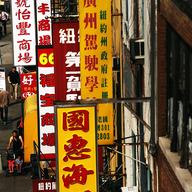
Ethnic enclaves are among the jewels of New York — places where the city's immigrants can ease their way into American life while holding onto aspects of the old country. And of course, for outsiders, opportunities to get the "most authentic" dumplings/kababs/tamales. But in some cases there's a serious downside: they stifle English proficiency and limit opportunities to climb the economic ladder.
"I think that in terms of the ability to speak English, ethnic enclaves are not good," said Brigitte Waldorf, a professor at Purdue University who has co-authored a paper on the enclave effect.
Waldorf's research suggested that a 35-year-old woman from China — married, living in the U.S. for five years, earning $25,000 a year, and without a high school degree — had a 28 percent chance of knowing English if she were the only Chinese speaker in a given neighborhood. But if she were to live in a Chinese enclave — say, 10 percent Chinese — the likelihood that she would speak English would drop dramatically: to 13.6 percent.
It matters, she argued, because English is "an absolute must in American society in order to be fully integrated."
And it's not just immigrants themselves. As we explore in this episode of Micropolis, kids who are raised in certain enclaves are less likely to succeed in life.

WNYC is funded by sponsors and member donations