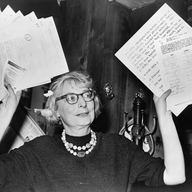
The Life and Legacy of Jane Jacobs
Wednesday marks what would have been the 100th birthday of urban activist Jane Jacobs.
Jacobs never went to college, but went on to change the way we think about cities by looking out of her Greenwich Village window at what she called the "sidewalk ballet" that played out on the street before her.
During the late 1950s and early 1960s, Jacobs fought against so-called urban renewal, going against its major proponent, Robert Moses. Her seminal book, The Death and Life of Great American Cities, was published in 1961.
But detractors question whether she offered constructive solutions to the crises cities were going through in the middle of the 20th century — or just criticisms.
Alice Sparberg Alexiou is author of the biography Jane Jacobs: Urban Visionary.
"She really did not offer solutions, but, she offered criticism in a way that nobody else could or did. She saw things that nobody else did," Sparberg Alexiou said.
"You know how some people break codes and they see patterns? She looked at a city and she saw patterns that escaped not just the average person, but, you know, people who thought they knew everything about cities."
In this interview, WNYC's Jami Floyd speaks with Sparberg Alexiou about Jacob's life and legacy.


