Inside the Room with Cablevision’s Boss and 250 Angry Workers
Jutreau Villegas was just getting off her shift on the morning of Sept. 9, 2014, when she noticed a change in the atmosphere at Cablevision’s Canarsie depot.
“It was like a big hubbub. You know upper management is running around. And I’m like, what’s going on?” Villegas said.
Villegas is an outside plant tech – the person responsible for diagnosing and fixing cable TV and internet outages that happen in the middle of the night.
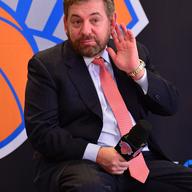
She said most of the company’s Brooklyn workforce was on hand that morning, as Cablevision staff were shown into a large room full of folding chairs. Then, a surprise: CEO James Dolan appeared, and took his place at a lectern.
“I’ve been there almost 16 years. I’ve never seen Dolan – ever,” Villegas said.
Another surprise was coming: Dolan told workers they were invited to vote in a special poll the next day, on the question of whether they wished to continue to be represented by the Communications Workers of America, a labor union they’d voted to join almost three years earlier.
“No one knew. And it was like shock and awe,” said Villegas, who is a member of the workers’ bargaining team.
Since 2012, the CWA had been unable to obtain a collective bargaining agreement, and there was growing discontent. Over 100 workers had signed a petition to de-certify the union.
Dolan told his workers that uncertainty over whether they really wanted the union had made contract negotiations difficult. “I think it's time that we find out what you really want,” he told them.
This meeting, and the vote the next day, are the centerpiece of a lawsuit by the Brooklyn office of the National Labor Relations Board. The government claims Cablevision, “impliedly threatened its employees” in that Sept. 9 meeting, and then “surveilled” them as they voted the next day.
Cablevision strenuously denies the charges.
Both Cablevision and the CWA supplied WNYC with recordings of the Sept. 9 meeting. The recordings show a workforce that is much preoccupied with the question of parity.
Three months after Brooklyn voted to unionize, Cablevision began to raise the wages of thousands of its non-union workers, by an average of 14 percent. People in the union saw this as a naked play to punish Brooklyn by rewarding everyone else. Since then, the union has been demanding parity, or equal wages.
Dolan told the workers that if they voted to keep the union, he would not raise their wages to be equal with everyone else’s.
“Your representatives have asked for more things than what the other employees are getting, and that has to come from somewhere. And that's why the actual take-home pay is less. But when you add it all together, it's our position that they are equal. And I will not change the position of the company,” Dolan said.
According to the government, this is a violation of the National Labor Relations Act, which forbids employers from promising to increase benefits as an inducement to workers to leave a labor union, or threatening to decrease benefits if they don't.
Dolan’s forum with the workers lasted almost two hours. Through much of the meeting, Dolan kept a calm demeanor. But as the workers started to speak up, there were flashes of anger.
“I won’t stay – right - if you start to have a melee here,” Dolan said at one point where many people began talking over each other. “That means you gotta address your questions to me, all right?!”
One worker, who gave his name as Otis Haynes, pointed out an irony: Dolan was fighting the union on wages in Brooklyn, but as the owner of the New York Knicks, he’s paying unionized athletes big money to shoot hoops. (The Dolan family businesses also include Madison Square Garden and Newsday.)
“You're telling me if you can get a basketball player such a big contract, whatever, why can't you do it for us? All of your other entities are unionized. Why can’t we have a union?” Haynes said.
After reminding Haynes that he doesn’t speak for all workers, Dolan said, “Those guys are who they are. And I think we all love them and love what they do because of how specially skilled they are…I don’t even know how to explain to you the difference between what a basketball player gets paid, et cetera.”
In the meeting, some workers argued that leaving the union was the best way to get higher pay.
“The Bronx already has it, all right? Long Island has it, Westchester has it. All right? Westchester has it, all right? Why should I have to pay dues on top of something I could get for free?” said one worker, who gave his name as Ruben Cruz. “I don’t need you guys!”
The next day, the workers voted, with the encouragement of both Jim Dolan and their union. The poll took place under the auspices of an independent third party, the Honest Ballot Association. By a margin of 129 to 115, the workers said they wanted to leave the Communications Workers of America.
But it was a non-binding vote, and therein lies the twist.
On Friday, Cablevision offered the still-unionized workers a contract that includes wages that are 96% of the non-union employees. After three hard years, there’s a collective bargaining agreement. On Saturday -- Valentine's Day -- the contract was ratified by what the CWA described as a "strong margin." The 262 Brooklyn workers are now the only unionized employees in the Cablevision system, the union says.
The government’s case against Cablevision over its alleged violations of labor law is still active.
EDITOR’S NOTE: The audio version of this story has been edited. The original version summarized Jim Dolan's comments about equal pay for unionized Cablevision workers. The modified version, posted above, contains his full quote for clarity.
CPT.29-CA-134419.Consolidated Complaint and Notice of Hearing

WNYC is funded by sponsors and member donations