Disease Quarantines Have an Ugly History
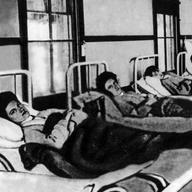
For many Americans, quarantines to control diseases seem like a thing of the past. We think of Typhoid Mary Mallon confined on New York City's North Brother Island in 1907 after she was accused of making dozens of people sick. But quarantines are now back in the news with the spread of ebola.
Connecticut Governor Dannel Malloy announced Wednesday that nine people are under quarantine after some of them traveled to West Africa.
James Colgrove is an associate professor at the Columbia University Mailman School of Public Health. He has written extensively about the ethics and history of disease quarantines and said quarantines in the past have targeted ethnic and religious minorities and immigrants. In 1900, a federal judge struck down a quarantine of San Francisco's Chinatown during an outbreak of plague, ruling that it unfairly targeted Chinese residents, but excluded white-owned businesses.
Quarantines that restrict people's movements are now only ordered in the most extreme cases, Colgrove said.
So far, those in the U.S. placed under quarantine have done so voluntarily, but Colgrove said people can be arrested for not complying with a quarantine order.
"The quarantine powers granted to public health officials are quite broad and most state quarantine laws give health officials considerable discretion to act as they see fit," Colgrove.
He spoke Thursday to WNYC's Amy Eddings.

WNYC is funded by sponsors and member donations