This Is the Democrat Who Wants to Replace Chris Christie
When voters go to the polls tomorrow, they’ll first have to confront the Ghost of Governors Past.
Republicans will have to accept that their candidate spent 8 years as the sidekick to Gov. Chris Christie. And Democrats are wrestling with whether their party’s nominee, Phil Murphy, is too much like Jon Corzine.
Both Corzine and Murphy made millions at Goldman Sachs, donated generously to Democratic party machines and spent some of their fortune on a self-funded campaign. That’s made many Democrats skittish, but allies of Murphy say the comparison ends there.
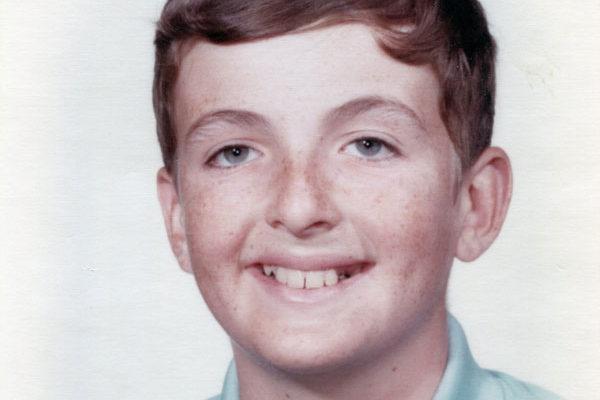
“Phil is totally different. I mean Phil is a really good guy,” said Howard Dean, the former governor and presidential candidate. He chaired the Democratic National Committee and worked with Murphy, who was finance chair, to raise money for the 2006 and 2008 elections.
“He’s very down to earth, very respectful of others no matter what their station in life,” Dean said. “I liked John but he's still totally different. Phil also has a really strong ethical compass.”
Corzine and Murphy worked in different divisions of Goldman Sachs. Corzine was a fixed-income trader, while Murphy was in investment banking. Peter Rose, a communications director at Sard Verbinnen & Co., worked at Goldman Sachs and knows both men. He says Murphy developed relationships as an investment banker that are at the core of being successful in that world.
“You often have CEOs who have got difficult problems with mergers,” Rose said. “Forming a relationship with that CEO and persuading her that the solution you have is the right one and you can be trusted is very important.”
Rose worked with Murphy when he ran the Asia division, during a period in which China was privatizing its state-run economy. He later climbed to the top echelons of Goldman Sachs. Corzine’s success, on the other hand, was based on math skills.
“John has the ability to see patterns that the rest of us can't do,” Rose said.
Murphy retired in 2003 at the age of 46, and began volunteering for projects tailored for a second career in politics. After raising money for Obama’s campaign, he was rewarded with a plum job, ambassador to Germany. Howard Dean says it was a smart appointment because this was during the financial meltdown, and he knew the German economy since for a while he'd run Godman Sachs' business there.
“He speaks German fluently, so this is not your run of the mill ‘I wrote a big check so I get an ambassadorship’ as we have seen more recently.”
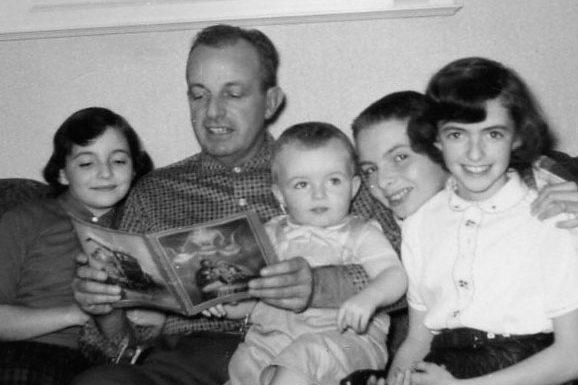
Murphy was born and raised outside Boston, the youngest of four kids. His mother was a secretary; his father left high school without graduating to work at a series of low-paying jobs.
“We didn't have two nickels to rub together, so I worked under the table when I was 13. I slept in my parents' bedroom till I was 9,” he told a group of neighbors in West Orange at a WNYC-organized discussion.
He got a scholarship to Harvard University, and almost went into musical theater instead of banking. He started as an intern at Goldman Sachs in 1982, and met his wife Tammy there. They are raising four kids in Monmouth County on an estate on the water with a pool and tennis courts, according to photos on the internet.
After announcing his candidacy, Murphy ran into problems early. There was disgust among Democrats that he donated about $466,000 to county committees and received their endorsements.
“For the past two years, this Democratic primary has been run a bit like an auction, except there’s just one candidate who’s bidding up the price” said his opponent, John Wisniewski, during a debate during the Democratic primary.
Murphy also took some heat for hacked emails to and from Hillary Clinton’s campaign director, John Podesta. They revealed that Murphy launched his non-profit, New Start New Jersey, in part to help him mount a run for governor.
Yet, during the primary, progressive organizations in New Jersey lined up behind him. Annalilia Mejia, director of the New Jersey Working Families Party, said that even though her organization is often to the left of the Democratic Party, they liked Murphy best and endorsed him over the Green Party candidate.
“So many were surprised that we endorsed him during the primary. But it really boiled down to, you know, who was for a clean $15 without any carve-outs,” Meija said, referring to the campaign to raise the hourly minimum wage to $15 without exempting whole groups of workers.
Meija worked on the Corzine campaign in 2009, and has had the opportunity to get to know Murphy in the last two years. She likes how Murphy grasps the details of policy and takes an interest in all the people around him, from top to bottom.
“Just because he's made a lot of money hasn't erased his personal history,” Meija said.” I think the reality is that he does benefit from his upbringing.”
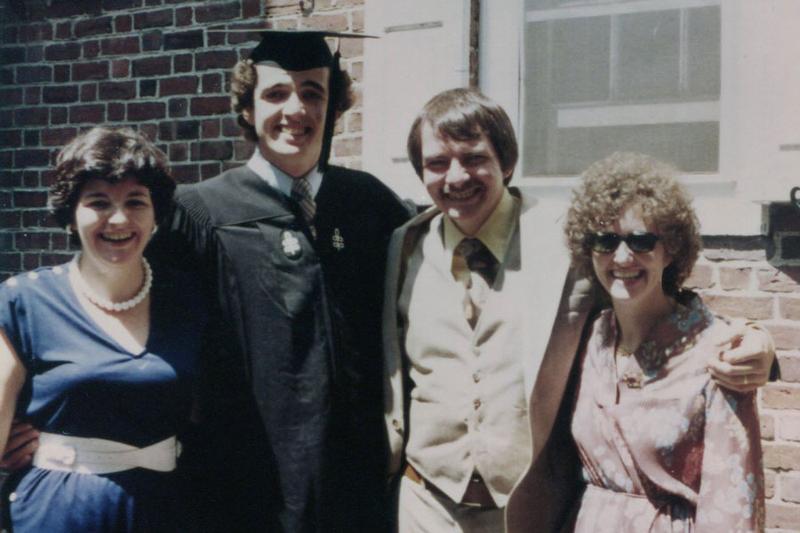

WNYC is funded by sponsors and member donations