What Causes Breast Cancer? These Mothers and Daughters May Hold a Clue
Jenny Singleton got breast cancer at age 48. So did her mother, at age 66.
“When my breast cancer was diagnosed, I immediately thought we must have a gene for it,” Jenny Singleton said. “So I was tested and I didn’t have the BRCA gene. And so that’s often left me wondering well, then why is it that my mom and I both got breast cancer?”
Cancer susceptibility genes are estimated to account for only 5-10% of breast cancers overall. Now the Singletons and thousands of other families are part of a study that is looking to see if there is evidence that environmental exposures in utero could account for some breast cancers later in life.
Barbara Cohn is leading this research. Cohn is the director of the Child Health and Development Studies (CHDS) in Oakland, Calif. From 1959 to 1967, CHDS researchers enrolled some 20,000 pregnant women — including Jenny’s mother, Bernice — in a long-term study to track their health and the health of their children. Over the past 55 years, researchers have continued to track those families, using the data to investigate everything from the effects of smoking and exposure to pesticides during pregnancy, to possible root causes of schizophrenia.
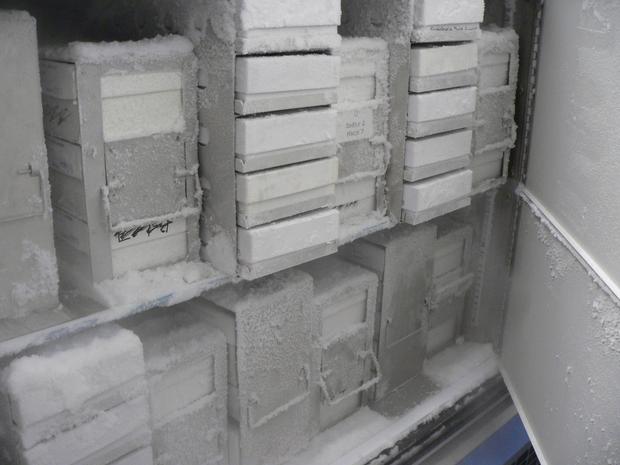
Having blood samples taken during pregnancy is allowing Cohn to test her hypothesis that pregnancy is a particularly vulnerable time to be exposed to environmental chemicals.
“To our knowledge, we’re doing the very first, what I call womb-to-breast cancer study, in the world,” Cohn said.
Health researchers in this field like to say that genetics load the gun, but the environment pulls the trigger. Finding that trigger, however, is hard. Cohn is hoping to pinpoint chemicals in the pregnant mothers’ blood that might be associated with a greater risk of breast cancer in their daughters, more than 50 years after they were born.
Standard labs conduct this kind of research by testing for the presence of specific chemicals, one by one, a labor-intensive process. Cohn said, "One chemical at a time is never probably going to give us the whole answer.”

That's why Cohn has turned to Dean Jones, professor of medicine and director of the clinical biomarkers laboratory at Emory University. Unlike most labs, his ultra-high resolution mass spectrometer can analyze tens of thousands of chemicals at once using just a drop of blood. His team has also developed complex algorithms that can analyze how those exposures are processed in the body.
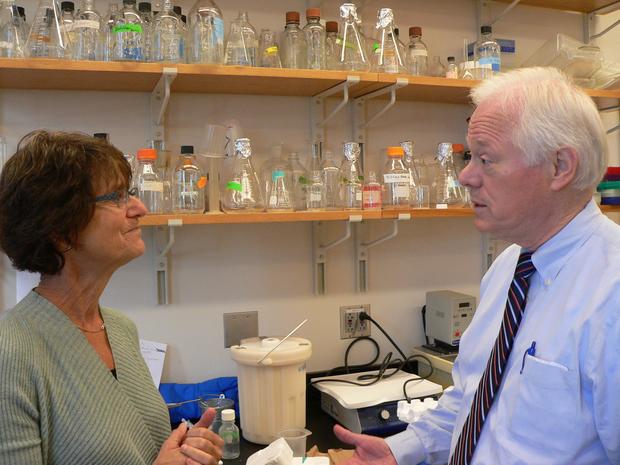
The goal for Jones is to be able to analyze a million chemicals someday and come up with an affordable clinical test that doctors could use on a routine basis to predict negative health outcomes based on specific biomarkers, “so that we can develop what I call a health forecasting system,” Jones said.
The research and technology isn’t there yet, but Cohn and Jones are getting closer.
Know Your Exposure: A Cancer Quiz
Over a lifetime, our risk for developing cancer is affected by our exposure to all kinds of things. Chemicals, X-ray radiation and lifestyle can tilt the odds against us. Take our quiz to explore the risks, including some you can avoid.
Our series is produced with NPR and with WETA, whose documentary Ken Burns Presents Cancer: The Emperor of All Maladies will air on PBS in March.

WNYC is funded by sponsors and member donations