Behind the Boom
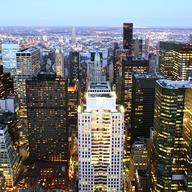
If you’ve recently turned a corner and been stopped in your tracks by a tall building that wasn’t there before, you’re on to something.
Real estate in New York City has been on a tear recently with sales prices hitting new records on a regular basis.
In 2014 construction spending exceeded $32 billion for the first time ever, rising 17 percent over 2013’s equally impressive $28.2 billion, according to the New York Building Congress. Their forecast shows continued growth with spending moving north of $35 billion in both 2015 and 2016.
Residential construction was the workhorse that drove the surge. Developers laid out a staggering $11 billion for new dwellings last year, one-third of all real estate investment. Compare that to 2013 and the boom years that preceded the crisis when residential construction hovered in the low to mid 20 percent range. And to understand the true impact on today’s building boom, consider that last year, residential construction was more than 400 percent higher than it was at the bottom of the recession that hollowed out the housing market.
The $11 billion developers spent bought the city over 20,000 housing units, 22 percent more than 2013; however, they spent 60 percent more to build those units. As it became costlier, developers churned out high-end residential units with higher sticker prices, looking for higher returns.
For some perspective, during the go-go housing years of 2006 and 2007, developers spent just $6 billion to build over 30,000 units each year. That’s an average cost of $200 per unit compared to almost $500 per unit in 2014.
As developers pushed high-end units, buyers were only happy to oblige. Residential sales topped $45 billion in 2014, 12 percent higher than a year earlier, according to real estate appraisal firm Miller Samuel. But while buyers spent more, there were fewer sales as average sales prices climbed 12 percent.
And much of those sales happened in the luxury market. The combined top 10 percent of residential sales in each of the five boroughs grew 24 percent.
Manhattan and Brooklyn account for most of the growth. The average home sale in Manhattan jumped to $1.8 million, 18 percent higher than 2013. In Brooklyn, the average was $700,000, and increase of 12 percent. In both boroughs, the surge in luxury unit prices outpaced the overall market, with average prices for the top 10 percent climbing 32 percent and 15 percent in Manhattan and Brooklyn, respectively.
Expensive real estate is nothing new for New York. For decades, residents have weighed the city’s lack of affordability against the cultural and economic backdrop. And the city has weathered boom and bust cycles before. But for those worried that today’s real estate froth is beginning to resemble the years preceding the crisis, it’s important to recall the circumstances that lead to the last bust.
In the mid to late 2000s, easy credit fueled a real estate market built on aggressive lenders pushing money to shaky borrowers. Following the meltdown, lending standards tightened almost instantly and loans that were easy to come by a few years earlier dried up overnight. Those stringent lending standards are largely still in place making it much more difficult for homeowners to get loans without substantial money down, demonstrable earnings and solid credit.
As it has been harder to get a mortgage, all cash has become king. According to Jonathan Miller of Miller Samuel, almost half of Manhattan’s property sales went to cash buyers. That says something about where the money is coming from and helps to explain why the market skewed to the high-end. Even buyers who did rely on home loans had to contend with stricter standards that forced them to put more skin in the game (and hopefully will soften the landing in case of any future market corrections).
There are some signs that the luxury market is softening. Crain’s New York Business recently reported that sales have slowed in some of the city’s most exclusive new developments. Oversupply tends to lead to more buyers to take their time and bargain for lower prices. Combine that with a stronger dollar, making it harder for foreign buyers to enter the market and the prospect of higher interest rates promised by the Federal Reserve and the real estate market in 2015 may not end as rosy as last year.

WNYC is funded by sponsors and member donations