It's Raining Cats and Dogs in the Theater
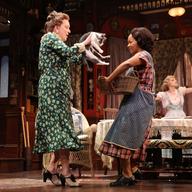
The Broadway revival of “You Can’t Take It With You” stars James Earl Jones, Rose Bryne and two kittens.
George Kaufman and Moss Hart’s screwball comedy is about an eccentric New York family in the 1930s. The daughter is a ballet dancer/cook, the husband makes fireworks in the basement, and Penny Sycamore, the family matriarch, is a hopeful playwright with a stack of unfinished scripts.
In the opening scene, she’s to be found feverishly typing her latest script. Every once in a while, she absentmindedly retrieves a fresh sheet of paper from under a dozing kitten (and a second is tucked away in a trunk at the foot of her desk.)
Kristine Nielsen, who plays Penny, said her cuddly co-stars, named Groucho and Harpo, help set the tone of the play. “It will only help us with the madcap insanity.”
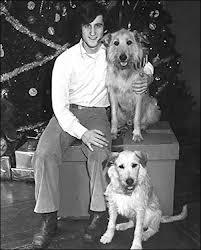
The kittens came from a local animal rescue group, and will be available for adoption when they age out of the show. This strategy may have started with trainer Bill Berloni, who found Sandy for the original Broadway production of "Annie" in 1977.
Sandy was a mixed-breed dog from a local animal shelter, and started Berloni on a 30-year career training animals for the theater. He said "Annie" was the first show in which an animal had a key role.
But historian Nigel Rothfels explained that animals have had some role in performance for “as long as we’ve had performance.” Ancient cultures may have used them ritually or magically, and many contemporary artists are beginning to explore the embodiment of animals in their work.
On Broadway, animals still have more traditional roles, as pets, or props, but it can still be challenging to work with them in real time, and Berloni said the real key is a bond with the actor. He said Andrea McCardle, the original Annie, “made Sandy love her,” and also mentions actor Karen Ziemba’s attachment to the saucy Pomeranian Trixie who was her co-star in “Bullets Over Broadway.” “My favorite part of being in the show,” claims Ziemba.
It's not as easy as it sounds, explained Berloni. "It's harder to train a dog to act like a normal dog than it is to train them to do amazing behaviors," he said.


WNYC is funded by sponsors and member donations