On Talking Race to Young Teens, Teachers Say It's Been a Tough Year
After a year that saw high-profile police shootings plus the deadly attack on a black church in South Carolina, middle school teachers told WNYC their classrooms were abuzz with personal and sometimes difficult conversations. And they didn't always feel prepared to handle what came up. In a brief reprise of our Being 12 series, we explore the topic of talking about race and racism to children in the throes of early adolescence.
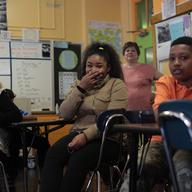
One morning in May, Stephanie Caruso had a question for her seventh graders at West Side Collaborative Middle School. She wanted to know if they’d ever been stopped by police when leaving the Upper West side campus for lunch.
An African-American girl named Joya Gaskin said she and her friend were once questioned by a white policeman.
"It was like kind of right after like the whole Ferguson thing, so I didn’t know if it was because of our race because it kind of came off like that," she told her classmates who were listening closely.
It turned out a bunch of them had similar experiences. Some wondered whether they were being stopped because of their race or because they’re kids and they weren’t in school.
Caruso had been thinking about these questions a lot since the deaths of Eric Garner on Staten Island and Michael Brown in Ferguson, Missouri, at the hands of white police officers. As a humanities teacher, she regularly wove current events into her lessons but this school year, punctuated by a number of disturbing police brutality cases, really challenged her and her students.
"It’s been exhausting," she said.
She and her colleagues at West Side Collaborative expected race to come up in ways both profound and silly during class. Their students experienced grown-up situations, like being stopped by police, but they also called each other names like "burrito boy." More than ever, though, these teachers wanted to explore language, prejudice and racism with their kids. The year's events demanded it.
As the school year came to a close, they said it had been difficult at times, not least because they were making it up as they went along.
"You don’t receive training to have that type of discussion, that real discussion with your kids about that reality," said West Side Collaborative teacher Victoria Thomas.
Although the school's teachers attended a session with the group Facing History and Ourselves, they had no lesson plans or ongoing support. Instead, they worked together to select reading and writing exercises relevant for 12- and 13-year-olds. This is an age when children become much more aware of how race and privilege influence all kinds of real world events. It's also when they're developing their own identities, as separate and independent young adults. Delving into these topics in a classroom setting requires teachers to have a certain comfort level.
"Before you can have the conversation with young people, you have to have the conversation with yourself," said Deidre Franklin, managing director of counseling, family engagement and training for YWCA in Brooklyn. She offers training sessions for teachers where she encourages them to develop a deeper understanding of race and the dynamics that go along with it. "So if you understand racism and you understand power, you understand privilege, you can start having conversations about Ferguson."
But it can be hard for public schools to find the time and money for training. That’s why many say the real experts on teaching about race and diversity are in the city’s private schools.
Anshu Wahi is the Director of Diversity and Community at the Bank Street School for Children in Manhattan where every faculty member attends a workshop on institutional racism and works with Wahi to integrate different perspectives into their lesson plans.
"When I explain my job to, like, kindergartners, I say there are so many things that make up who we are as individuals and my job is to make sure that every single person who comes to school feels like they can be their whole selves," she said.
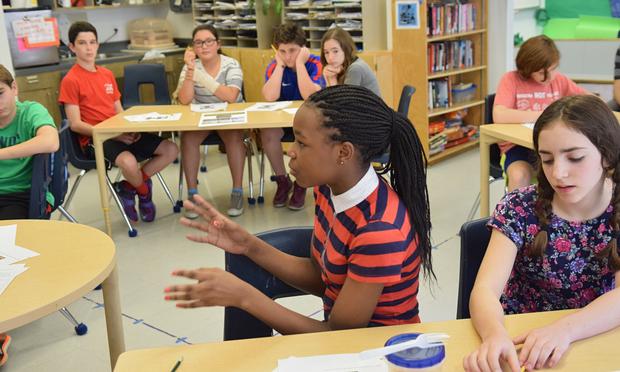
During a seventh grade humanities class this spring, students debated what it meant to be white. It was part of a unit on immigration but their teacher wanted them to also look at the world today. The kids discussed a cartoon showing how white teenagers were encouraged to wear a hooded sweatshirt when it’s cold, but the same outfit made a black teen look suspicious.
The kids had so much to say that their teacher, Nayantara Mhatre, barely needed to facilitate. But she said it took a long time to get to this level.
"I think when it’s embedded in the curriculum anyway, and when they feel comfortable with each other and comfortable with their teachers and they feel safe and they feel respected and trusted and they respect and trust me, we’re able to do that," she explained.
She said knows some people might question whether teachers should spend so much time tackling race and diversity issues. But Mhatre said it's unavoidable.
"They know about all this stuff so I can’t ignore it," she said. "I don’t want to ignore it and if I do ignore it, they will bring it up anyway."
In response to the year's news, more schools have reached out for help, according to several race and diversity training groups. The principal of West Side Collaborative said she’s now planning to work with the group Border Crossers to help her teachers tackle the topics that are sure to come up next year.

WNYC is funded by sponsors and member donations